
Fra to- til tredelt grunnslag
From duple to triple beat subdivision
Norsk introduksjon
I denne modulen finner du materiale til arbeid med veksling fra todelt- til tredelt grunnslag. Gjennom øvelsene vil du bli kjent med rytmer som bygger på åttendelstriolen, samt fjerdedelstriolen i alla breve.
Syng rytmene mens du takterer eller banker pulsen. Duettene passer godt til tostemt øving i gehørgruppen. De kan også gjennomføres individuelt ved å synge én stemme og spille den andre, eller ved å spille inn én stemme og deretter synge den andre sammen med opptaket.
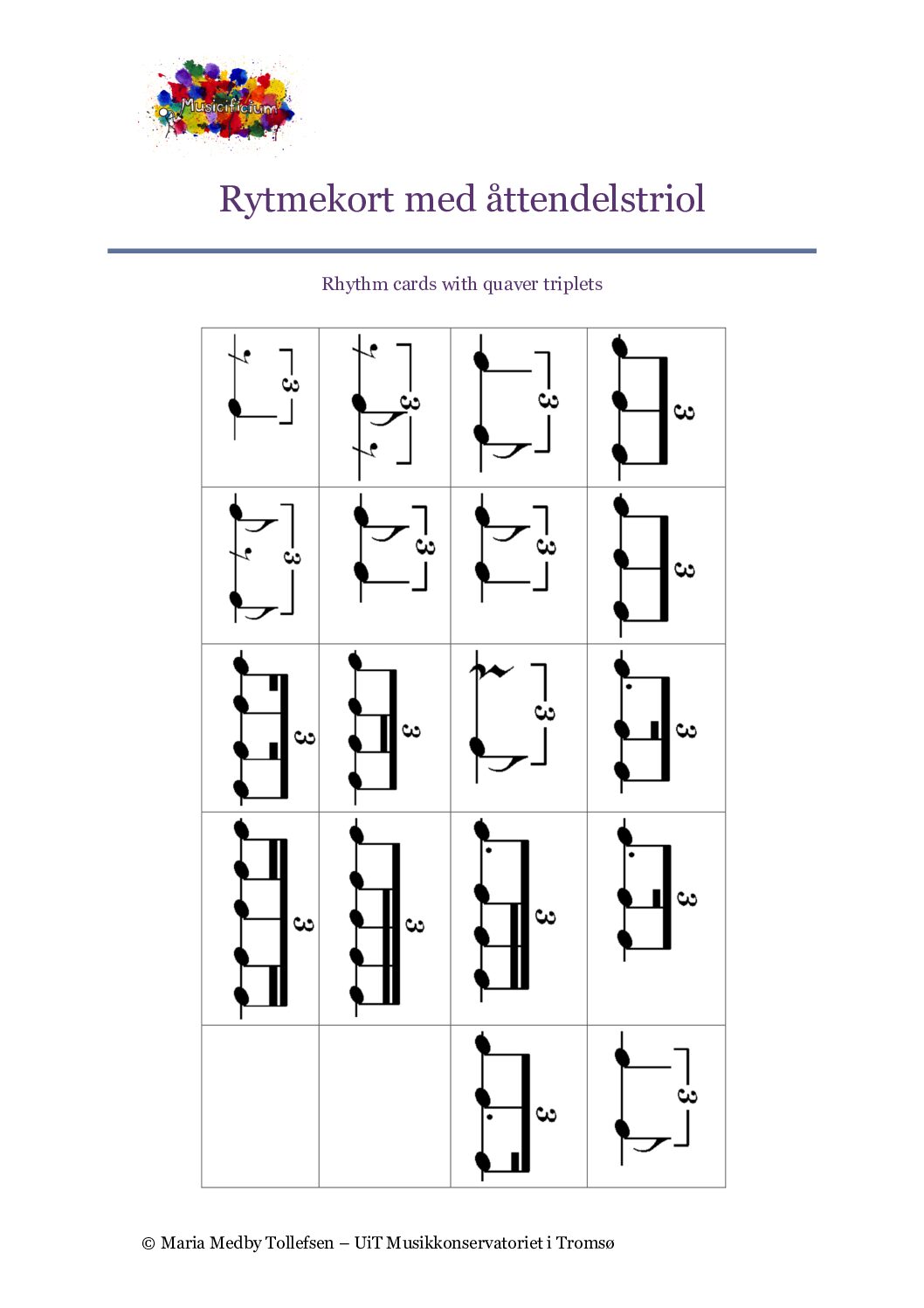
Modulen inneholder et sett med rytmekort der rytmefigurene er basert på åttendelstrioler. For tips til hvordan du kan bruke disse, se modulen om rytmekort. På rymekortarket er det to tomme bokser. I disse kan studentene lage sine egne rytmefigurer basert på åttendelstriol.
Klikk på bildene for å hente PDF.
English introduction

Åttendelstriol/ Quaver triplets
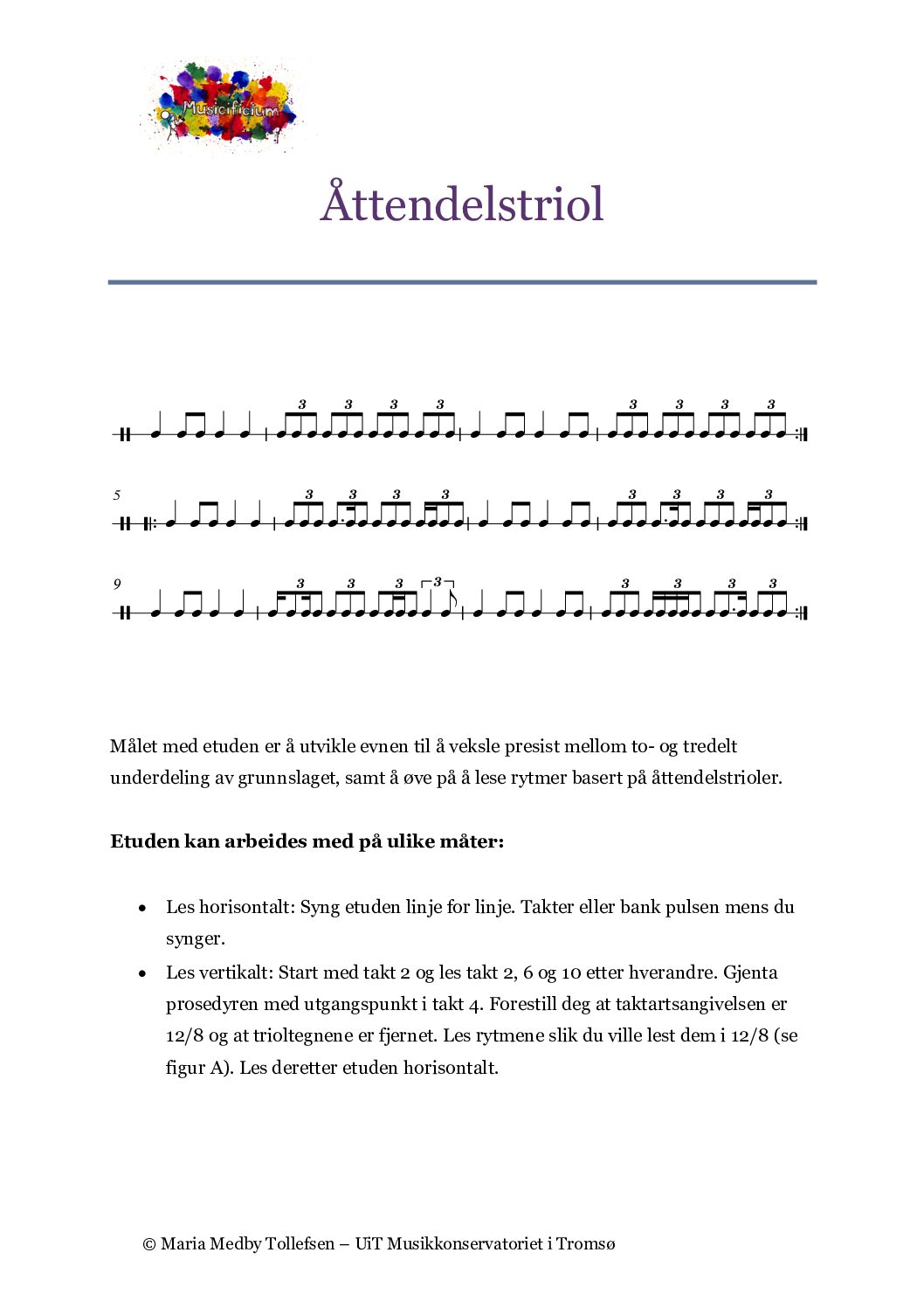
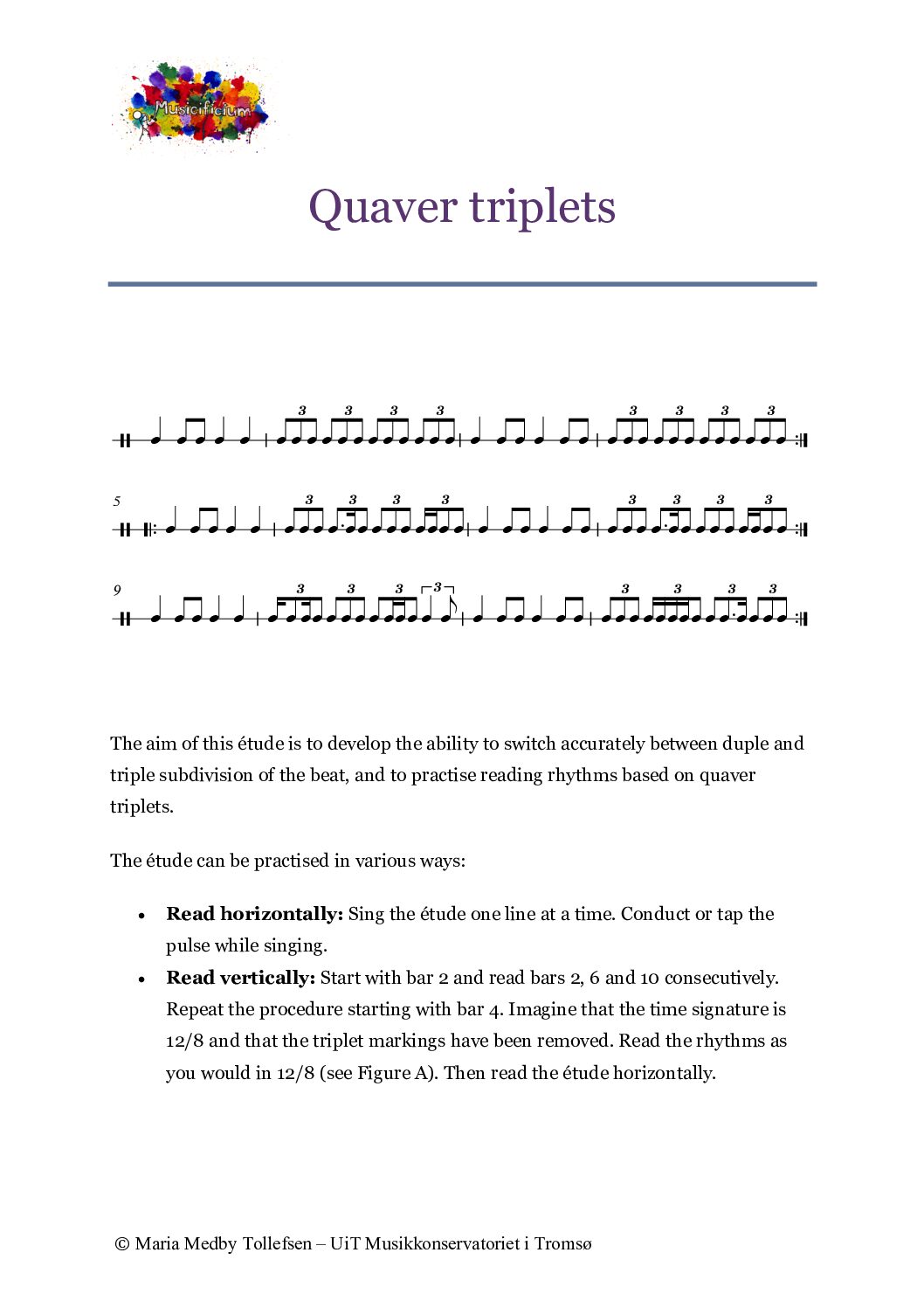
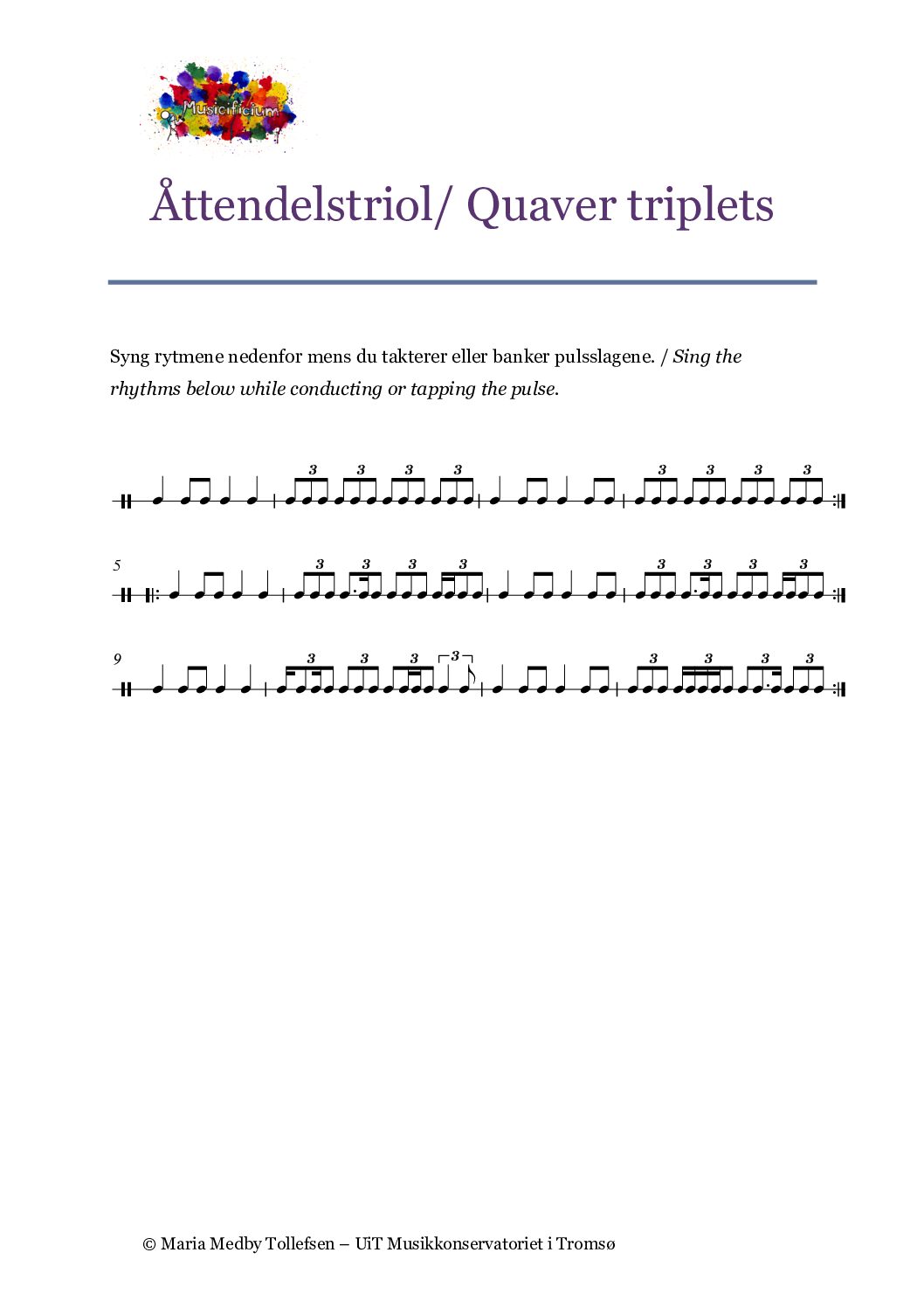
Etude
Med norsk oppgavetekst:
With English explanation:
Uten oppgavetekst/ Without explanation:
Rytmekort
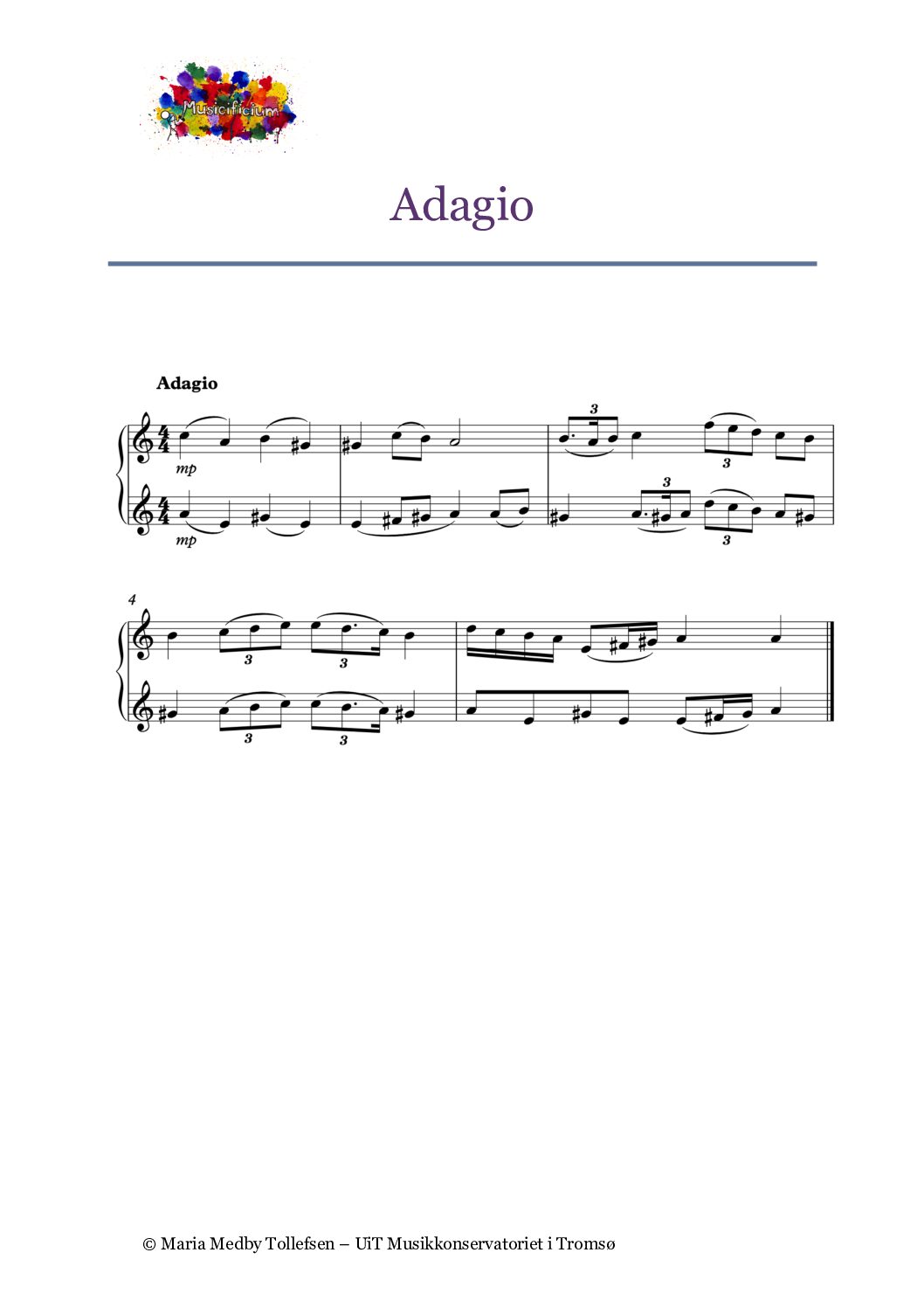
Duet-Etude: Adagio
Harpa
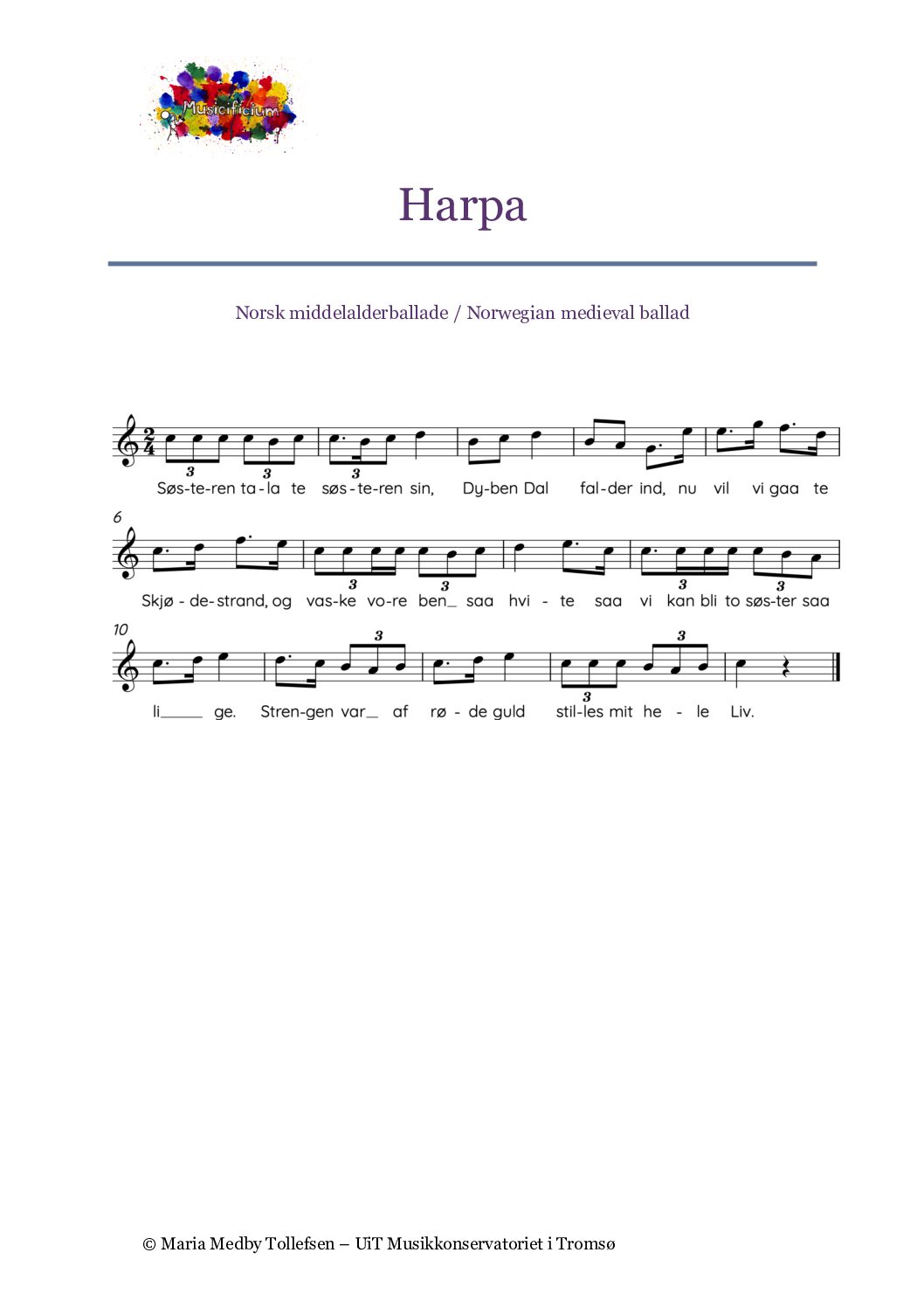
Harpa (Norw.ballad)
Om/ about
Innspillingen er både rytmisk og melodisk fri, og gjør den lite egnet til øving på rytmene. Det er allikevel interessant å lytte til vekslingene mellom tredeling og todeling i denne autentiske fremføringen.
The recording is both rhythmically and melodically free, making it less suitable for practising the rhythms. Nevertheless, it is interesting to listen to the alternation between triple and duple subdivisions in this authentic performance.
Bimba dagli occhi (Puccini)
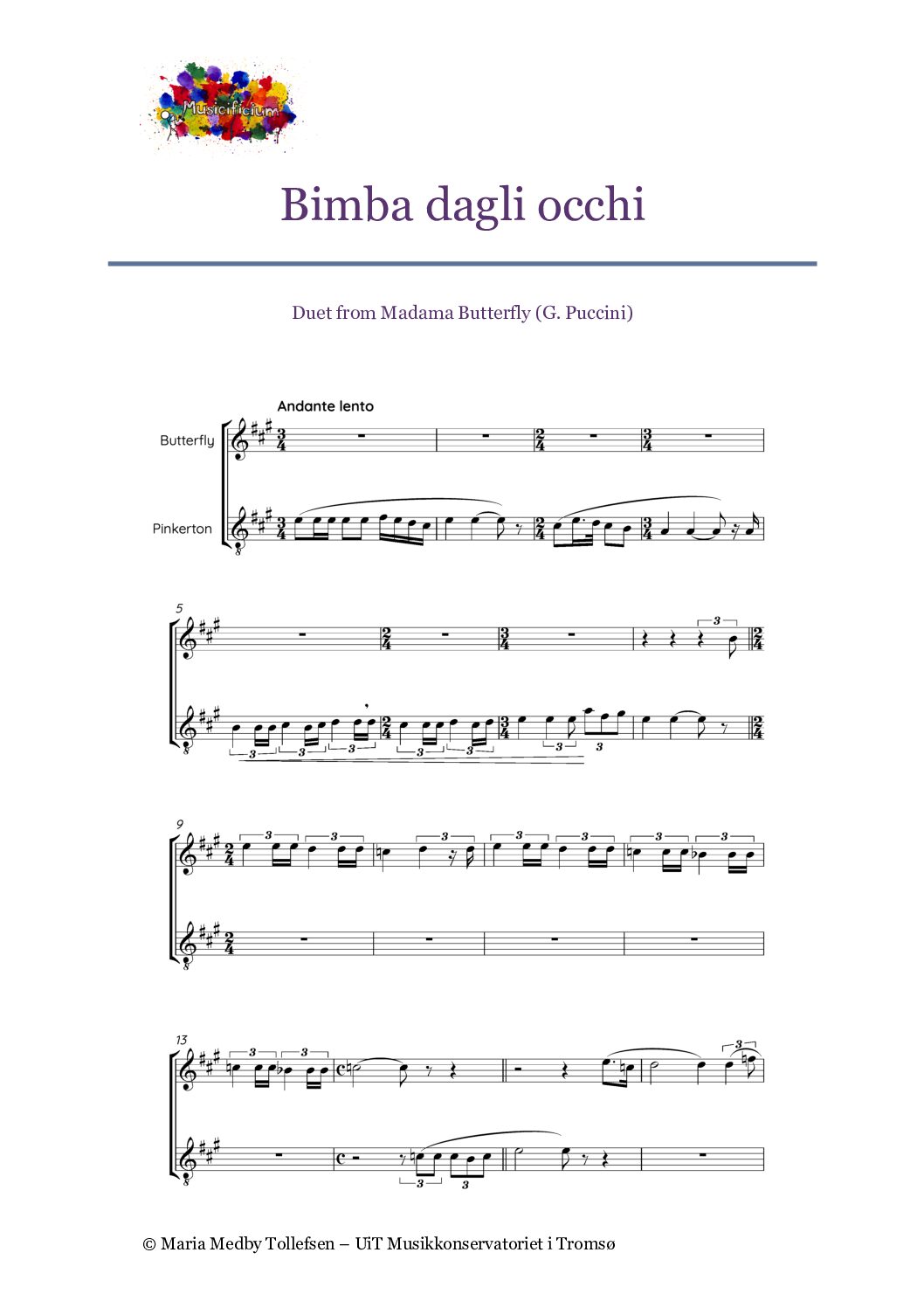
Bimba dagli occhi (G. Puccini)
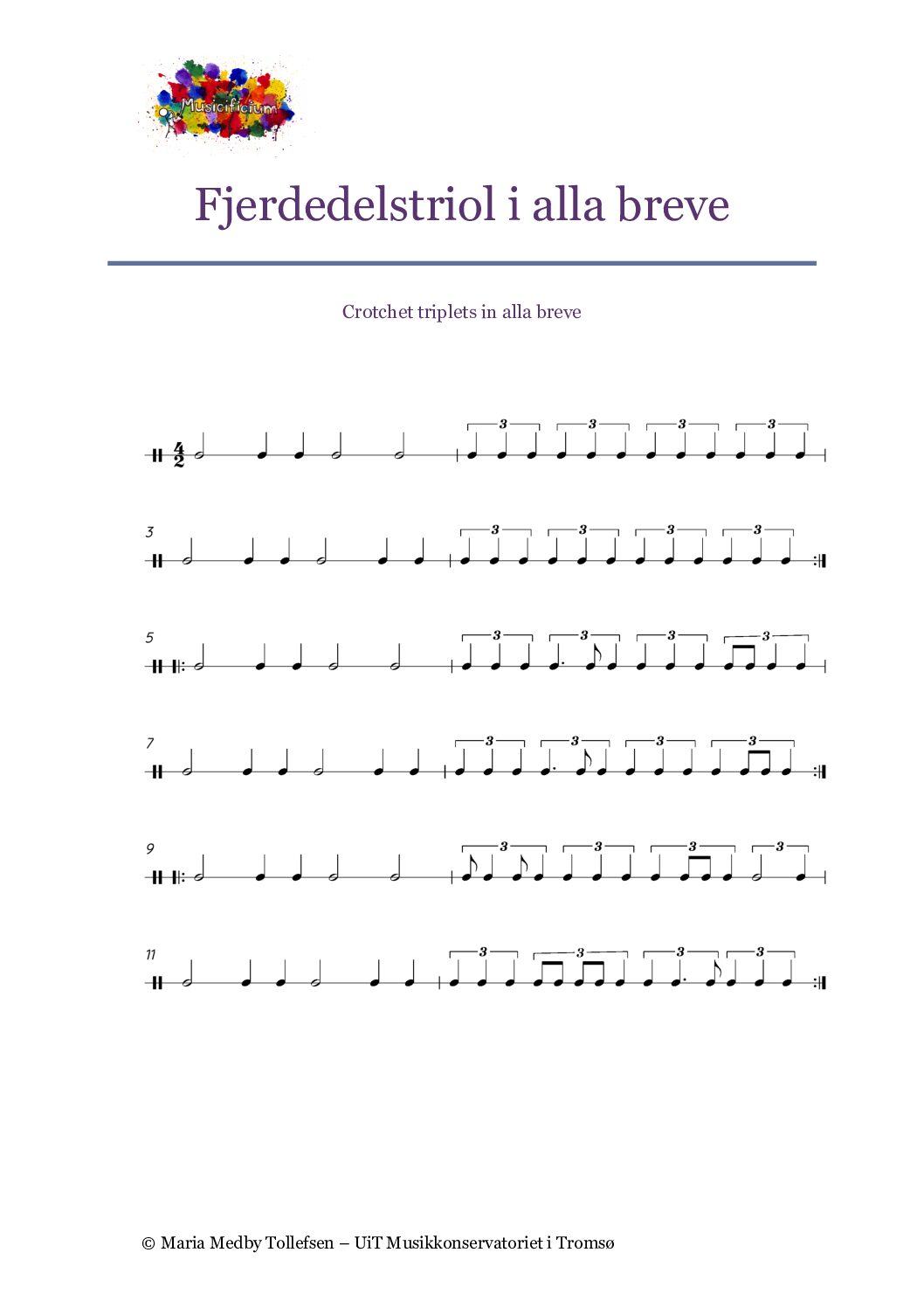
Fjerdedelstriol i alla breve/ Crothchet triplets in alla breve
Etude
Øvetips/ Practice tips
Begynn i takt 2 og øv vertikalt (takt 2, takt 4 osv.). Forestill deg at du er i rask 3/4-takt. Når rytmene er avkodet, synger eller spiller du etyden i sin helhet slik den er notert.
Begin in bar 2 and practise vertically (bar 2, bar 4, and so on). Imagine you are in a fast 3/4 time. Once you have decoded the rhythms, sing or play the étude in its entirety as notated.