
Forest greif
The children of the Vysočina region in the Czech Republic are missing the woods. Until recently, the dense, fresh forests turned into arid grazing tracks on heavy machinery. Even small children still remember how they went to play in the forest, the older ones remember the forest camps and others how they went with their parents to the forest for trips.

About
The children of the Vysočina region in the Czech Republic are missing the woods. Until recently, the dense, fresh forests turned into arid grazing tracks on heavy machinery. Even small children still remember how they went to play in the forest, the older ones remember the forest camps and others how they went with their parents to the forest for trips.
Read more
How do they experience the deforestation of the landscape in their immediate surroundings?
How do they see the future of forests?
Will they ever have a chance to spend time in the woods?
What do they see as the cause of the devastation of the landscape and how do they cope with it? And do they see any way they can help the forests themselves?
Environmentalist Barbora Klocová sought answers to these and many other questions in a study in cooperation with the Chaloupky educational center and environmental psychologist Jan Krajhanzl from Masaryk University. She recorded a total of 31 personal interviews with children and adolescents from the Vysočina region aged 8 to 18.
Specifications
Pedagogical value
The documentary film Forest Grief is used in various educational settings. It serves as an inspiration and a basis for discussions and debates in schools from the 7th grade onwards, covering a wide range of topics such as deforestation, climate change, and emotions.
The film is featured on a website that collects learning materials and educational activities for teachers to use when teaching about climate change. Along with the film, the website also provides a methodology paper designed to support teachers in integrating the documentary into their lessons.
Info
Screenings
Read about the other selected films
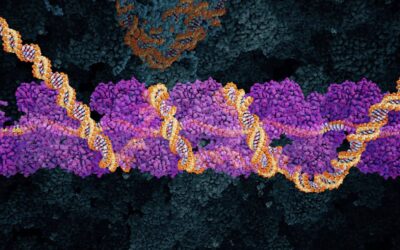
Dna break repair by homologous recombination (au)
Homologous recombination is crucial in repairing double-strand breaks in DNA, correcting errors, and maintaining genomic integrity. This animation highlights the role of BRCA1 and BRCA2 in DNA break repair in homologous recombination. Designed to support outreach on WEHI research into breast cancer and provide world-class education materials on foundational cell biology topics.
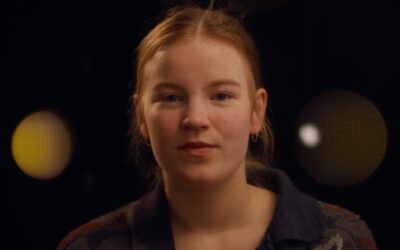
Things that keep me up at night (se)
Thirteen young people from six different countries share the innermost thoughts that keep them up through the night. Videos of baby elephants, the fear of dying, of girls, and of losing someone you love. Things we rarely talk about, but often have in common.

Southern sami identity (no)
Identity is shaped by, among other things, a shared language, culture, and history. This short documentary offers insight into how two Southern Sami sisters perceive their identity, what they take pride in and the challenges they navigate. It is a story of how belonging to a minority can be both empowering and demanding. It comes with certain expectations – from the Southern Sami community, from Norwegian society, and from the sisters themselves.


Hansine Hansens veg 18, 9019 Tromsø


