Creating multispecies neighborhoods in the oslofjord (no)
Challenges and Opportunities

About
How can we include nature when developing urban seascapes? What does it take to invest in an invisible world? These digital stories intertwine art, marine ecology, landscape architecture, and urban development. They emerge from exploratory action research driven by a need to act: to reveal an overlooked landscape and raise awareness of its spatial qualities, colors, and the rich diversity of life in the symbiosis between sea and shore
Specifications
Director Biography
Dr. Elin Tanding Sørensen is an artist, animator, marine landscape architect, diversity activist, and independent researcher.
Her work blends marine landscape architecture, art, and urban rewilding, exploring the relationships between ecosystems and society. With extensive experience in eco–social art and community engagement, my research centers around multispecies placemaking and co–learning. Through collaborative, cross–disciplinary projects, I aim to inspire collective care by merging artistic vision with social change
Pedagogical value
Pedagogical Context and Application These digital stories are part of an exploratory, research-based educational framework rooted in an emerging marine landscape architecture, articulated through Sørensen’s PhD. The pedagogical approach combines participatory action research, multispecies storytelling, and multisensory learning to engage students with the often invisible ecologies of urban shorelines. The stories are used in master’s-level courses, workshops, and interdisciplinary seminars in landscape architecture, planning, art, and environmental humanities. They prompt critical reflection on conventional development, inviting students to explore interspecies relationships and the spatial politics of the sea. Learning activities include sensory mapping, field observation, design and placemaking tasks where students reimagine urban seascapes as multispecies neighborhoods. The stories serve as both case studies and co-learners, fostering ecological empathy and nature-inclusive design thinking. Originally created for Sørensen’s doctoral defense (Multispecies Neighbourhoods in Urban Sea Areas, NMBU, 2016–2021), the stories marked the first use of digital storytelling in a PhD defense at the university. They continue to evolve through ongoing research and her upcoming book (Designing Multispecies Neighbourhoods in Urban Seascapes, Routledge, 2026). The stories contribute to Ocean Literacy by translating complex marine knowledge into embodied narrative. They are also used in public seminars and cross-disciplinary education, offering a portable and emotionally resonant tool for engaging with the ocean as a living, shared world.
Info
Screenings
Read about the other selected films
Dna break repair by homologous recombination (au)
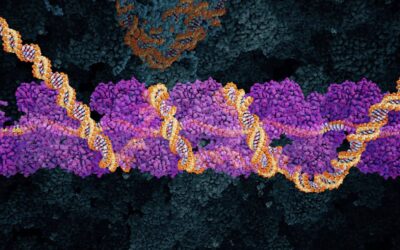
Homologous recombination is crucial in repairing double-strand breaks in DNA, correcting errors, and maintaining genomic integrity. This animation highlights the role of BRCA1 and BRCA2 in DNA break repair in homologous recombination. Designed to support outreach on WEHI research into breast cancer and provide world-class education materials on foundational cell biology topics.
Things that keep me up at night (se)
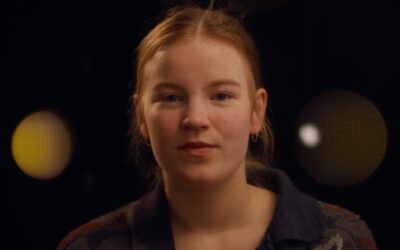
Thirteen young people from six different countries share the innermost thoughts that keep them up through the night. Videos of baby elephants, the fear of dying, of girls, and of losing someone you love. Things we rarely talk about, but often have in common.
Southern sami identity (no)
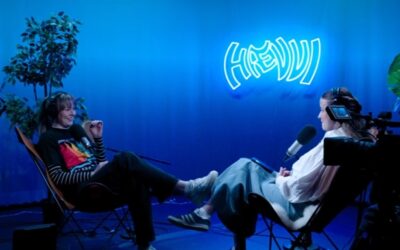
Identity is shaped by, among other things, a shared language, culture, and history. This short documentary offers insight into how two Southern Sami sisters perceive their identity, what they take pride in and the challenges they navigate. It is a story of how belonging to a minority can be both empowering and demanding. It comes with certain expectations – from the Southern Sami community, from Norwegian society, and from the sisters themselves.


Hansine Hansens veg 18, 9019 Tromsø